

By Maxime Duzyk, Director of Building Science and Engineering at Huntsman Building Solutions
Moisture challenges in western Canadian buildings are often associated with winter and summer. During these seasons, large differences between indoor and outdoor temperature and humidity increase the likelihood that moisture will move through the building envelope.
However, spring and fall, commonly referred to as shoulder seasons, can be just as important for enclosure performance. Although the temperature and humidity differences during these transitional periods are typically less extreme, the conditions are far less stable due to fluctuating temperatures and changing humidity levels. These shifts can place greater stress on the continuity of enclosure control layers.
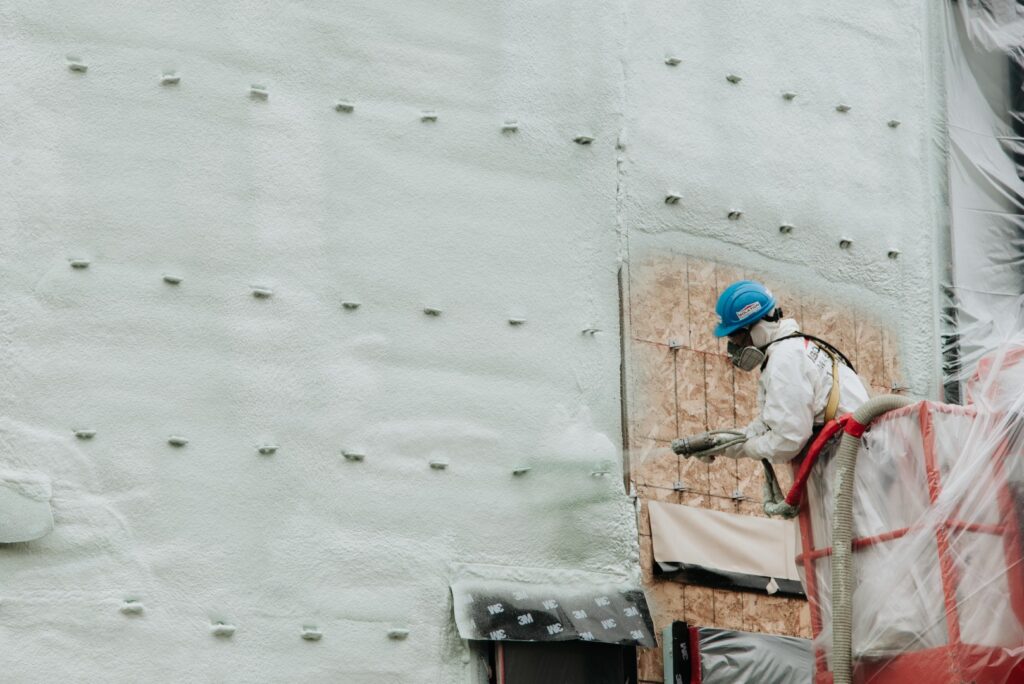
In these conditions, even small discontinuities in insulation, air barriers, or vapour control materials can create pathways for moisture to enter wall or roof assemblies. Insulation systems that help create continuous control layers across complex assemblies therefore play an important role in limiting these pathways. Closed-cell spray polyurethane foam (SPF) insulation is particularly well suited to this role because it can form continuous insulation while also acting as an air and vapour barrier, supporting overall enclosure continuity.
Understanding shoulder season vapour dynamics
During shoulder seasons, buildings may shift between heating and cooling modes while exterior temperatures move above and below interior conditions over short periods of time. Humidity levels can also fluctuate significantly, altering vapour pressure gradients across the building envelope. These changes can cause vapour drive to reverse direction repeatedly, meaning moisture may move outward through assemblies at one time and inward at another.
When this occurs, small discontinuities in air barriers, insulation layers, or vapour control strategies can allow moisture-laden air to enter wall or roof assemblies, increasing the potential for interstitial condensation and long-term moisture accumulation.
Across western Canada’s diverse climate zones, these transitional conditions can be particularly complex. Coastal British Columbia experiences relatively mild temperatures but persistent humidity, while prairie regions are characterized by large temperature swings, rapid seasonal transitions, and periodic humidity spikes during spring and summer. These regional patterns can create rapidly changing vapour pressure conditions across the building envelope. As a result, vapour diffusion, air leakage, and material permeability may interact differently during shoulder seasons than during more stable winder or summer conditions.
Thus, maintaining continuous enclosure control layers becomes particularly important. Materials that combine insulation with air-sealing and vapour control capability, such as closed-cell SPF, can help limit the pathways through which moisture enters assemblies as vapour drive shifts throughout the year.
This emphasis on enclosure continuity is also reflected in modern building codes. Canadian energy codes increasingly recognize the importance of enclosure continuity in managing both energy performance and moisture risk. The National Energy Code of Canada for Buildings (NECB), for example, places strong emphasis on continuous air barrier systems that limit uncontrolled airflow through the building envelope. While this requirement is often associated with energy efficiency, it also plays a critical role in moisture control – particularly during seasonal transitions when vapour pressure conditions can change rapidly.
For this reason, enclosure systems that combine insulation and air sealing within a single, continuous layer have become increasingly valuable. Closed-cell SPF insulation is one such approach, functioning as an air and vapour barrier while expanding in place to seal irregular cavities, penetrations, and transitions.
Air leakage: The primary moisture transport mechanism
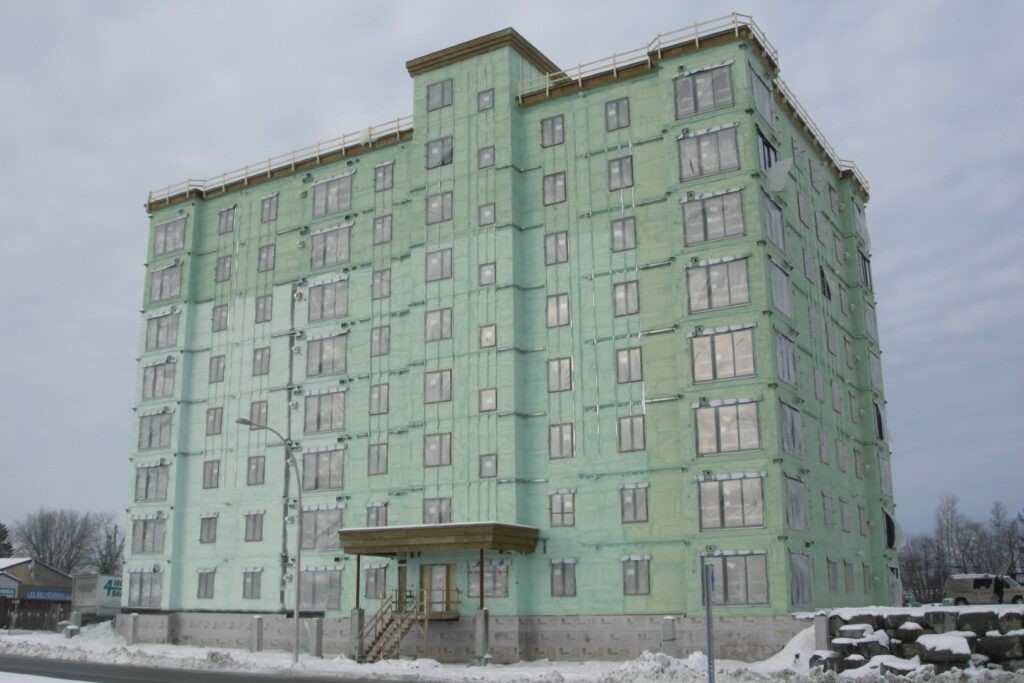
While vapour diffusion through materials is often discussed in building science, moisture transported by uncontrolled air leakage typically represents a far greater source of moisture movement within building assemblies. Even small gaps in the air barrier, such as poorly sealed penetrations, discontinuous membranes, or misaligned transitions between materials, can allow warm, moisture-laden air to enter the enclosure. When this air encounters colder surfaces within a wall or roof assembly, condensation can occur.
Shoulder seasons can intensify this risk. Fluctuating outdoor temperatures influence stack pressures, while changing wind conditions alter building pressures. As buildings move between heating and cooling modes, air movement through small enclosure openings can increase, carrying moisture into assemblies.
Controlling air leakage is therefore one of the most effective ways to reduce moisture accumulation within the building envelope. Insulation systems that also serve as continuous air and vapour barriers can play an important role in maintaining enclosure performance.
Closed-cell SPF insulation is commonly used for this purpose. By forming a continuous air and vapour barrier, it helps reduce the pathways through which moisture-laden air enters wall and roof assemblies. This dual function of providing thermal insulation while controlling both air movement and vapour diffusion is particularly valuable during shoulder seasons, when fluctuating pressure conditions increase the likelihood of air-driven moisture transport.
Coordinating air, vapour, and thermal control
Managing moisture during shoulder seasons requires an integrated approach to enclosure design. Rather than relying on a single material layer, designers increasingly focus on how water, air, vapour, and thermal control layers align throughout the building enclosure.
When these layers are discontinuous or poorly coordinated, the risk of moisture accumulation increases significantly – particularly during spring and fall, when assemblies may experience both inward and outward vapour drive within short periods of time.
In practice, this means enclosure systems must be designed so that insulation, air barriers, and vapour control strategies work together rather than function as isolated components. Misalignment between these layers can create gaps in protection where moisture and air can enter the assembly.
Materials that perform multiple enclosure functions can help simplify this coordination. Closed-cell SPF insulation is often used in this role because it can act as a continuous layer while also serving as an air and vapour barrier within a single application. When used alongside other enclosure components, such as exterior membranes, cladding systems, and other drainage layers, SPF can help strengthen the overall continuity of the building envelope.
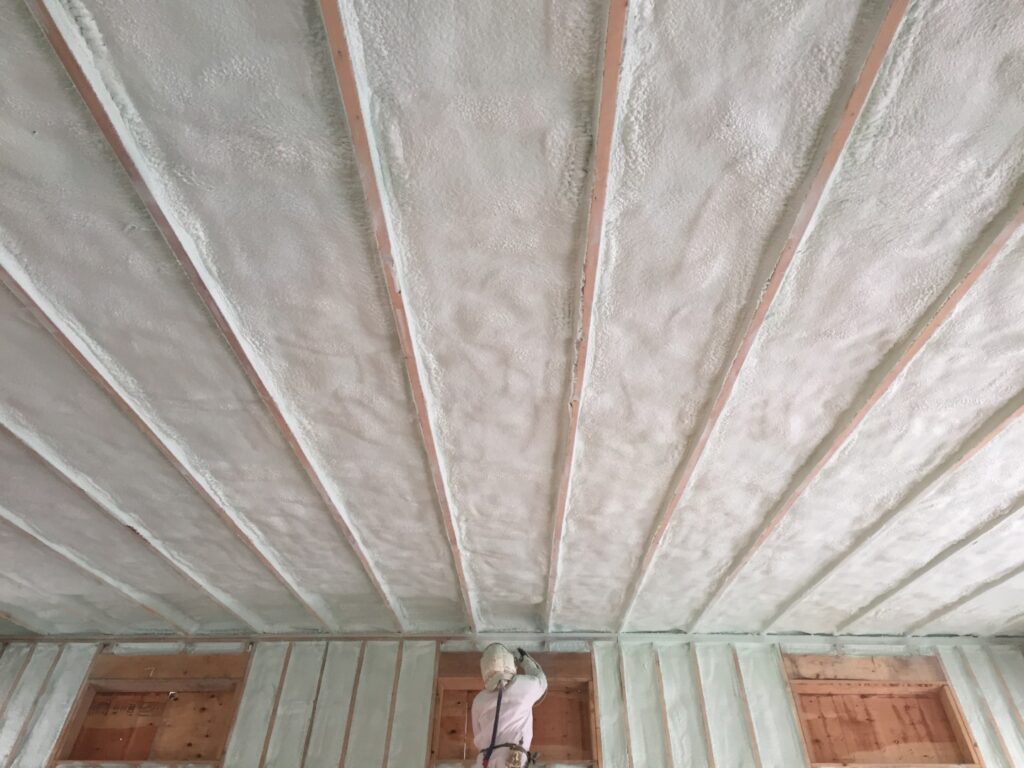
In practice, closed-cell SPF is frequently applied in wall cavities, roof assemblies, and transition areas such as rim joists or service penetrations where maintaining alignment between control layers can be difficult. By forming a continuous insulation layer and integrated air and vapour barrier, it helps maintain coordination between thermal, air, and vapour control strategies within the enclosure.
Because closed-cell SPF inherently provides low vapour permeability, it offers strong resistance to vapour diffusion while simultaneously controlling air leakage. This combination is particularly important in Canadian climates, where vapour barriers are typically required and must be carefully integrated with air barrier systems.
A high-stress example: Year-round ice arenas
Few buildings illustrate the challenges of vapour management more clearly than indoor ice arenas that operate throughout the year. Inside these facilities, interior conditions remain intentionally cold to maintain the ice surface. During summer months, however, exterior air can be warm and humid, creating a strong inward vapour drive as moisture in the exterior air moves toward the colder interior environment.
If the building enclosure contains air leakage pathways or poorly coordinated control layers, moisture can infiltrate wall and roof assemblies and condense within structural components. The resulting damage may include corrosion of metal roof decks, degradation of insulation materials, and persistent condensation problems.
Ice arenas therefore represent an extreme example of the vapour pressure differences that can occur in buildings. To perform effectively, these facilities rely on highly continuous air control systems and robust thermal insulation to limit moisture migration toward cold interior surfaces.
In some arena assemblies, closed-cell SPF insulation is used to provide a continuous layer that also functions as an air and vapour barrier, helping maintain enclosure continuity and reduce air leakage pathways. By limiting both air leakage and vapour diffusion, closed-cell SPF helps reduce the potential for moisture migration toward cold surfaces where condensation could occur. This simplifies the building performance detailing for architects as a sole product provide all properties. There is therefore no need to wonder if the vapour control layer is positioned on the right side of the insulation in varying seasons and building conditions.
Although most residential and commercial buildings experience less dramatic temperature differentials, the same principles still apply. During shoulder seasons, exterior humidity levels may rise while interior spaces remain relatively cool. In these situations, enclosure systems that maintain continuous insulation and air control – including assemblies that incorporate closed-cell SPF – can help limit the moisture pathways that allow vapour to enter wall or roof assemblies.
Designing for transitional conditions
While winter cold and summer humidity often dominate discussions of moisture risk, the shifting conditions of spring and fall present their own set of challenges. Shoulder seasons introduce fluctuating temperatures, changing humidity levels, and pressure conditions that can cause vapour drive to reverse direction within building assemblies.
For designers and builders in western Canada, this means enclosure strategies must account not only for peak seasonal extremes, but also for the dynamic conditions that occur between them. Assemblies that maintain continuous air control, thermal insulation, and effective vapour management are better positioned to limit moisture accumulation under these variable conditions.
Approaches that incorporated closed-cell SPF – functioning as continuous insulation and an air and vapour barrier – can help reduce unintended air leakage and control vapour movement simultaneously. By considering how these control layers interact across walls, roofs, and transition areas, project teams can better manage moisture risks throughout the full seasonal cycle.

About Maxime Duzyk
Maxime Duzyk is the senior global director of building science and engineering at Huntsman Building Solutions. He holds a background in architecture and has been in the sprayfoam insulation business for the last 15 years. Duzyk is involved with different building envelope committees and associations in North America such as CSC, SFC, SPFA, CCMC, and ULC Standards.

About Huntsman Building Solutions
The Huntsman Building Solutions business is a global leader in high-performance, sustainable building envelope solutions. Its systems and solutions are widely utilized to optimize commercial and residential structures worldwide in both new construction and retrofit applications. Formed in 2020 with the acquisition of Icynene-Lapolla and its combination with Demilec, the Huntsman Building Solutions business capitalizes on legacy industry technologies, environmental stewardship, and the power of the Huntsman brand.
For more information, visit huntsmanbuildingsolutions.com.
Leave a Reply