

By Maxime Duzyk, Director of Building Science and Engineering at Huntsman Building Solutions
Across Western Canada, the shift from spring thaw to summer heat brings a different set of performance demands for building envelopes. While cold-weather resilience often dominates design conversations, the warmer months bring their own challenges. Increased solar gain, wind-driven rain, rapid temperature swings, and higher humidity levels can all expose weaknesses in wall assemblies.
In mixed and often unpredictable climates such as British Columbia, the Prairies, and parts of the Interior Plains, building envelopes must respond to more than just insulation requirements. They must manage the continuity of air, vapour, thermal, and water control layers under changing environmental conditions. Achieving this level of performance comes down not only to detailing and coordination, but also to material selection. Systems such as spray polyurethane foam (SPF), particularly closed-cell applications, can support both insulation and effective air and vapour control within a single installation, helping maintain continuity at critical transition points and adapt to the realities of on-site construction.
Transition points under pressure
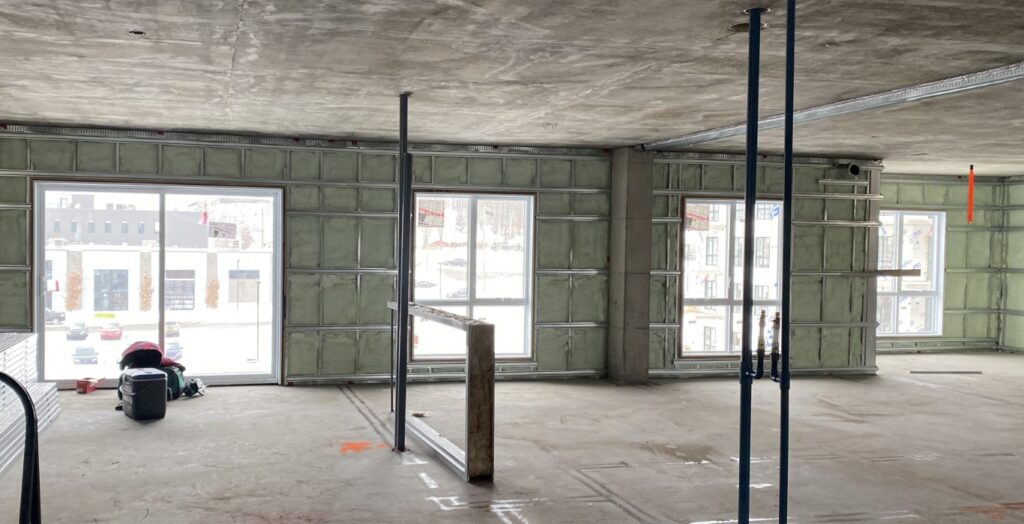
Transitions between assemblies remain one of the most common sources of envelope failure, particularly during spring and summer storms. Roof-to-wall connections, window interfaces, balcony penetrations, and foundation transitions are all areas where multiple materials and trades converge. These junctions tend to be highly sensitive to both air leakage and moisture intrusion.
In Western Canada’s coastal regions, wind-driven rain can be especially aggressive. When wind-driven pressure differentials increase during storms, even small discontinuities at transition points can allow moisture to be pushed deep into the assembly. Over time, this can result in concealed moisture accumulation, leading to material degradation such as rot, mold, corrosion, and reduced insulation effectiveness.
At window interfaces, where multiple layers must align precisely to maintain both drainage and air barrier continuity, moisture staining is often observed around perimeters following the first rainy season. In most cases, this can be traced back to minor gaps at the transition between the window frame and surrounding air barrier.
Reducing this type of vulnerability requires a combination of precise detailing and materials that can accommodate real-world construction conditions. Closed-cell SPF applications can support this by expanding to fill irregular cavities and reinforcing continuity at complex transition points where rigid materials or tapes may be difficult to install consistently and continuously.
Managing heat gain and thermal bridging
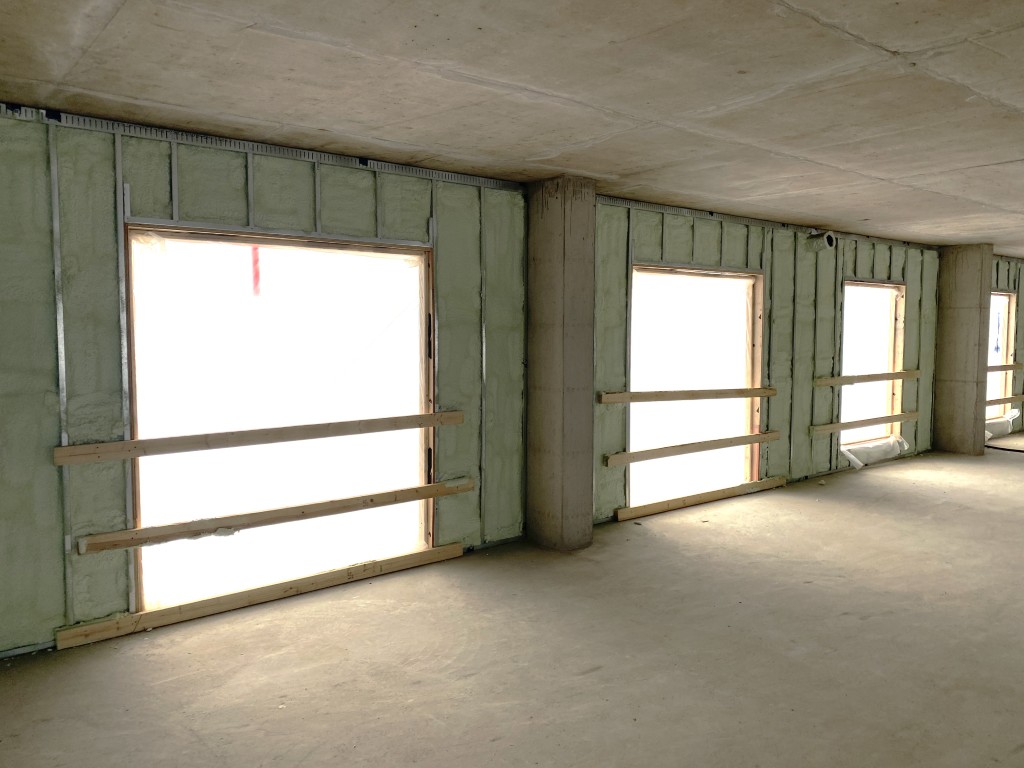
As temperatures rise, solar heat gain becomes a major contributor to occupant discomfort and increased cooling demand. In wall assemblies, thermal bridging through structural elements such as studs, slab edges, and balconies can significantly reduce overall thermal performance.
While thermal bridging is often discussed in the context of heat loss during winter, it plays an equally important role in summer conditions. Heat entering through bridged elements can create localized hot spots, uneven interior temperatures, and additional strain on mechanical systems.
This effect is often most noticeable during extended heat waves, particularly in regions with high solar exposure and large daily temperature swings, such as parts of the Prairie provinces. In these conditions, uneven cooling is commonly reported, with areas adjacent to slab edges or structural penetrations requiring more cooling. Thermal imaging frequently identifies heat gain at junctions where continuous insulation is disrupted.
Addressing these conditions requires more than simply increasing insulation levels. It depends on maintaining continuity across structural interfaces and selecting materials that can adapt to complex geometries. Closed-cell SPF can support this approach by providing high thermal resistance per inch while adhering tightly to irregular surfaces. This helps reduce heat transfer at junctions where continuous insulation is interrupted, improving overall thermal performance and reducing localized heat transfer in areas that are otherwise difficult to insulate effectively.
Air leakage and moisture transport in warmer months
Air leakage is not only a winter issue. During spring and summer, uncontrolled air movement can drive convective moisture transport into wall assemblies, especially when warm, humid air infiltrates cooler interior spaces. This can result in interstitial condensation within the assembly, even under relatively moderate temperature conditions.
In regions such as Vancouver Island or Fraser Valley, where humidity levels remain high for extended periods, managing air leakage becomes critical for preventing moisture accumulation and maintaining indoor air quality. Under these conditions, uncontrolled air movement can carry moisture into wall assemblies, increasing the risk of condensation within concealed spaces.
This is often most evident around service penetrations, where maintaining air barrier continuity can be more difficult to execute on site. In wood-frame construction across coastal regions, condensation within wall cavities is often observed during early summer. Investigation typically points to discontinuities in the air barrier at mechanical, electrical, and plumbing penetrations, allowing humid outdoor air infiltration and subsequent condensation on cooler interior surfaces.
Maintaining performance in these areas depends on achieving constant air barrier continuity across all penetrations. Closed-cell SPF can support this by adhering directly to surrounding substrates and sealing irregular openings, helping reinforce continuous air barrier performance at penetrations where maintaining control layer continuity is most challenging.
Constructability and on-site coordination
Even well-designed assemblies can underperform if constructability is not considered during planning and execution. The sequencing of trades, accessibility of critical areas, and the compatibility of materials all influence whether envelope details are installed as intended.
Spring and summer construction schedules often accelerate timelines, increasing the likelihood of coordination gaps between trades. When details are rushed or installed out of sequence, localized inconsistencies can accumulate into measurable performance deficiencies, particularly in air leakage and moisture control.
These challenges are often most apparent at service penetrations and transition points that are completed after the primary air barrier is in place. On many mid-rise projects, mechanical and electrical installations to follow initial envelope work, requiring penetrations to be completed after the fact. In these conditions, penetrations are often sealed using a mix of materials, some of which may be incompatible or poorly suited to the substrate. This can result in gaps, reduced adhesion, and elevated air leakage rates identified during testing.
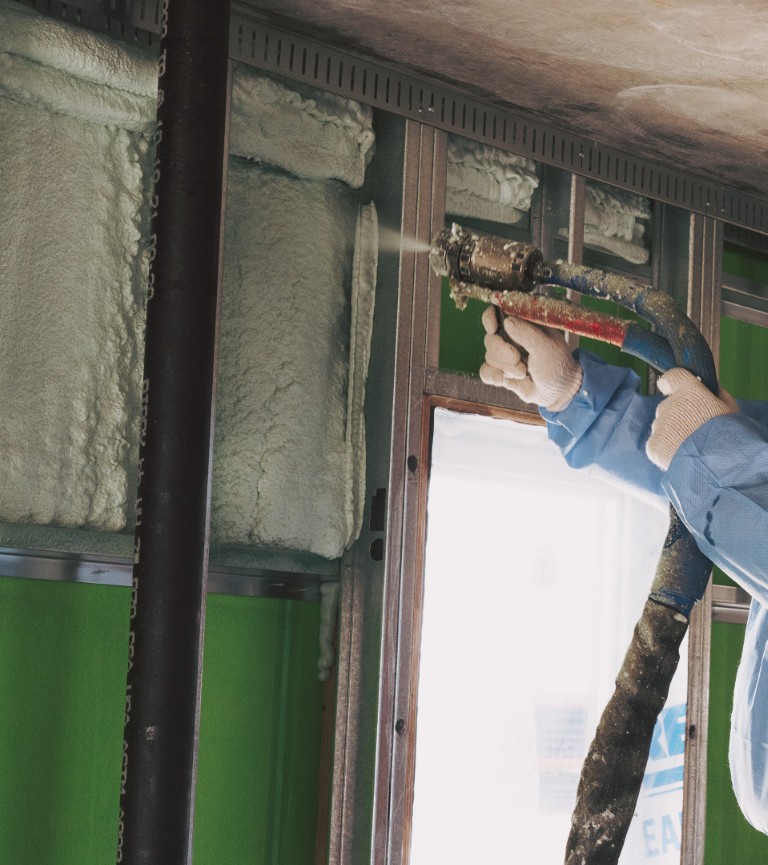
Maintaining continuity under these conditions depends on selecting materials and systems that can accommodate real-world sequencing constraints. Spray-applied insulation systems, such as closed-cell SPF, can support this by allowing installers to seal around late-stage penetrations and irregular interfaces, helping restore continuity of the air barrier and insulation layers in areas where sequencing or access constraints limit the effectiveness of pre-installed systems.
Resilience in an era of extreme weather
Western Canada is experiencing more frequent and intense weather events, including heavy rainfall, heatwaves, and rapid temperature fluctuations. These conditions place additional stress on building envelopes, particularly at their most vulnerable points.
Resilience is no longer defined solely by meeting code requirements. It involves designing assemblies that can maintain performance over time, even when exposed to conditions that exceed typical expectations.
These stresses are often most visible during peak weather events, when multiple performance demands occur simultaneously. In regions experiencing rapid temperature fluctuations and combined environmental loading, envelope vulnerabilities are often exposed when assemblies are subject to repeated wetting, drying, and pressure changes over short periods of time. While most assemblies perform as intended, localized failures are frequently observed at poorly sealed penetrations and transition points. These areas can become entry points for moisture, leading to repairs shortly after occupancy.
Improving resilience depends on integrating insulation, air control, and moisture management into a coordinated system rather than addressing them in isolation. SPF, particularly, closed-cell applications, can support this approach by combining these functions within a single, durable material layer. In areas exposed to repeated wetting, floods, temperature swings, and pressure changes, this continuity helps limit pathways for air and moisture while maintaining consistent thermal performance. This multi-functional performance makes it well suited for reinforcing vulnerable areas and supporting long-term envelope durability under increasingly variable climate conditions.
Building for year-round performance
The performance of a building envelope cannot be evaluated based on a single season. In Western Canada, where conditions can shift rapidly from wet and cool to hot and dry, assemblies must be designed to handle a wide range of environmental stresses.
Transition points, penetrations, and air barrier continuity remain critical areas of focus. These are the locations where small detailing decisions can have a disproportionate impact on overall performance. By prioritizing constructability and selecting materials that can adapt to real-world conditions, project teams can reduce the risk of air leakage, moisture intrusion, and thermal inefficiencies.
SPF offers a practical solution for many of these challenges, particularly in complex or hard-to-access areas. When used as part of a well-coordinated envelope strategy, it can help address many of these challenges in a practical way. Stronger envelopes are not just about meeting current requirements, but about ensuring that buildings remain durable, efficient, and resilient throughout the full range of conditions they will face.

About Maxime Duzyk
Maxime Duzyk is the senior global director of building science and engineering at Huntsman Building Solutions. He holds a background in architecture and has been in the sprayfoam insulation business for the last 15 years. Duzyk is involved with different building envelope committees and associations in North America such as CSC, SFC, SPFA, CCMC, and ULC Standards.

About Huntsman Building Solutions
The Huntsman Building Solutions business is a global leader in high-performance, sustainable building envelope solutions. Its systems and solutions are widely utilized to optimize commercial and residential structures worldwide in both new construction and retrofit applications. Formed in 2020 with the acquisition of Icynene-Lapolla and its combination with Demilec, the Huntsman Building Solutions business capitalizes on legacy industry technologies, environmental stewardship, and the power of the Huntsman brand.
For more information, visit huntsmanbuildingsolutions.com.
Leave a Reply