

By Tim Laronde, National Director Indigenous Strategies at Chandos Construction
The Frog Lake First Nation Water Treatment Project is a clear demonstration of how Chandos’ Indigenous Strategy moves beyond policy and intent to deliver measurable, lasting outcomes for Indigenous communities. Delivered under a collaborative construction management (CM) model, the project reflects Chandos’ belief that infrastructure projects can and should be catalysts for economic participation, workforce development, and long-term community capacity – particularly when undertaken in partnership with First Nations.
From the earliest stages of pre-construction, Chandos worked closely with Frog Lake First Nation leadership, administration, and community members to align project delivery with the Nation’s economic development goals. This began with open community meetings, early engagement with Nation departments, and transparent discussions around employment, procurement, and local participation targets. Rather than relying on external service providers by default, Chandos adopted a ‘turn over every rock’ approach – actively identifying opportunities to utilize existing Nation capacity wherever possible.
This approach generated immediate and tangible economic benefits for Frog Lake First Nation. Nation departments were intentionally engaged to support project needs, including Emergency Services and Family Support Services, rather than relying on external providers. These decisions created significant revenue opportunities for the Nation, kept project dollars circulating locally, and strengthened internal departments through sustained, project-based work.
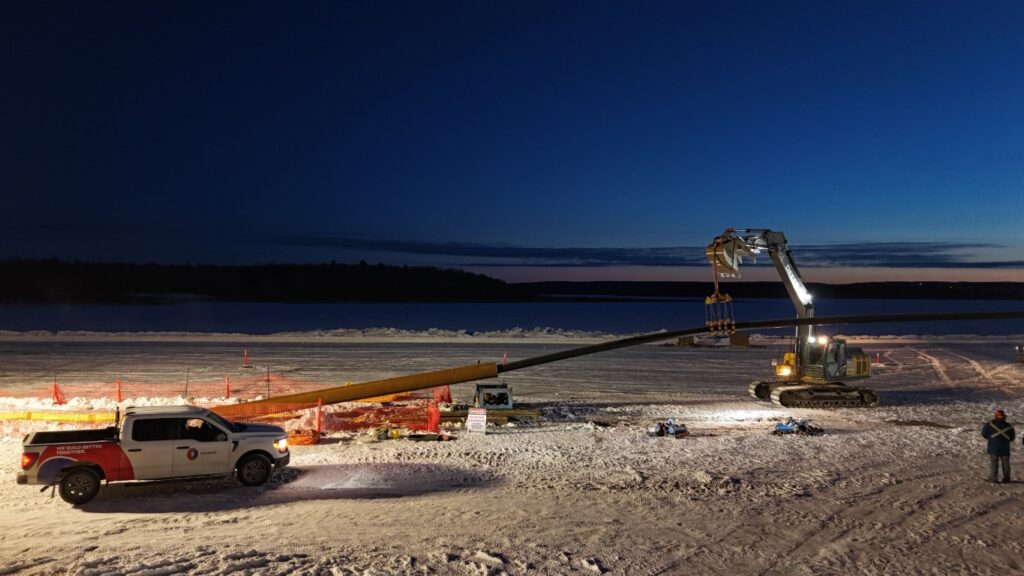
Local engagement
Local employment and workforce development were foundational elements of the project strategy. Chandos worked closely with the Nation’s Employment and Careers Centre throughout the project to support community participation and workforce readiness. This collaboration included regular coordination on staffing needs and hosting career fairs to ensure community members were aware of employment opportunities across Chandos and all subcontractors working on site.
Recognizing that the majority of project value flows through subcontractor labour and materials, Chandos developed a comprehensive workforce strategy that categorized labour needs into short-term, mid-term, and long-term scopes. This enabled intentional matching of community members to opportunities aligned with their availability and interests, while also creating pathways into apprenticeships. After three months of employment, labourers were eligible to become indentured carpentry apprentices, with Chandos covering the cost of their technical training. Practical barriers to employment – such as transportation to site – were addressed through coordinated group transportation, removing a common obstacle to participation.
Beyond employment, the project supported Nation-led economic development opportunities by leveraging existing local capacity. Two key initiatives included utilizing the Nation’s concrete batch plant and sourcing materials from local aggregate production. During the planning phase, the Nation advanced these opportunities with the support of third-party consultants to make them feasible for project delivery. Together, these initiatives generated over $3 million in revenue opportunities on this project alone that would otherwise have occurred outside the Nation, while strengthening local enterprises for future work.
Asset legacy was another key focus. Rather than defaulting to temporary site infrastructure and rentals, Chandos collaborated with the Nation to redirect these budgets into permanent assets. On Frog Lake, site trailer budgets were used to construct a 40-foot by 50-foot permanent shop, which will be repurposed as a mechanic training facility following project completion. In lieu of hotel accommodations, Chandos constructed three- and four-bedroom modular homes for crew housing that will remain on Nation as permanent community housing. These decisions ensured that project dollars resulted in lasting physical assets that support future training and housing needs.
For the people
Procurement strategies were intentionally structured to maximize participation by Nation-owned and member-owned businesses. Chandos invested time upfront to understand local contractor capabilities and, where appropriate, broke down work packages to reduce barriers to entry. Qualitative tendering practices were applied to prioritize local engagement and Indigenous content, particularly on ISC-funded components of the work.
Local spending was further maximized through fuel and catering strategies developed in collaboration with the Nation. Chandos implemented a fuel card system to ensure that all project fueling occurred at Nation-owned fuel stations. In addition, a significant opportunity was identified for the Nation to provide mobile fuel delivery services for construction equipment. The Nation advanced this opportunity by equipping its fleet to deliver fuel directly to site, creating meaningful revenue opportunities while supporting efficient project operations.
The success of these initiatives was supported by clear metrics, tracking, and accountability mechanisms established at project outset. In some cases, subcontract agreements included penalties for failing to meet local participation targets, with any shortfall directed back to the Nation – reinforcing the seriousness of Chandos’ commitments.
Ultimately, the Frog Lake First Nation Water Treatment Project illustrates how collaborative delivery, when paired with a robust Indigenous Strategy, can achieve far more than infrastructure outcomes alone. Through intentional planning, flexibility, and deep community partnership, the project delivered critical water infrastructure while creating wealth, building capacity, and leaving lasting economic and physical legacies for Frog Lake First Nation.
Learn more about the Frog Lake First Nation Water Treatment Project below.
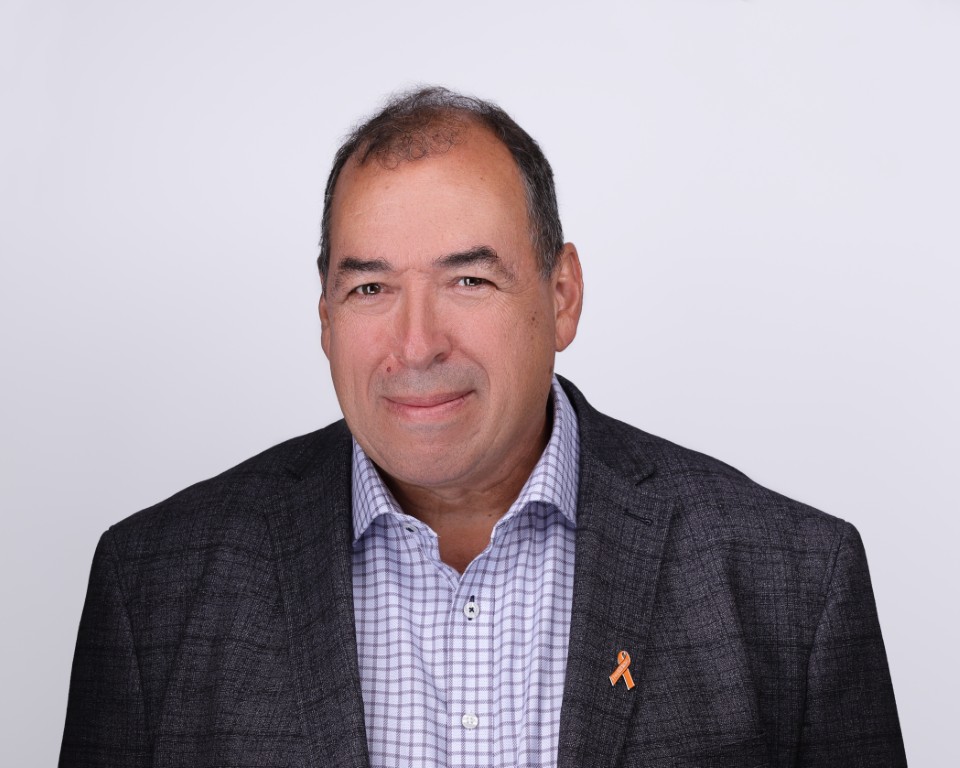
About Tim Laronde
Tim Laronde, a member of the Nipissing First Nation within the Robinson Huron Treaty area, brings over 25 years of experience in business services, with deep expertise in business development, negotiation, and capacity building through meaningful engagement with Indigenous communities. After a career in financial services focused on investments, commercial lending, and Indigenous Trusts, he transitioned to the construction industry in 2021 to support Indigenous self-determination. As National Director of Indigenous Strategies at Chandos Construction, Tim works to strengthen Indigenous capacity through procurement and talent development, while also championing cultural awareness, community service, and governance. A dedicated advocate for wealth creation, mentorship, and Indigenous women in leadership and trades, he continues to give back through board service, speaking engagements, and lifelong learning, including completion of the AFOA Harvard Business School program.
About Chandos Construction
Established in 1980, Chandos Construction has become one of North America’s most collaborative and innovative national technical builders. Employing more than 750 field and office staff in Calgary, Edmonton, Red Deer, Kelowna, Vancouver, Toronto, Ottawa, and Chalk River – Chandos is 100 per cent employee owned. Chandos is a pioneer in integrated project delivery (IPD) and collaborative construction.
Leave a Reply