

By Xeniya Vins, Architect AIBC, XV Architecture Ltd. and Xquimalt Developments Ltd.
The Canadian construction industry is in the middle of a structural shift that most people haven’t fully named yet. Single-family home construction in British Columbia has collapsed – not softened, collapsed – falling from 37 per cent of all housing starts in 2006 to a projected 10 per cent in 2026. At the other end of the spectrum, large condominium and purpose-built rental towers are stalling as pro formas stop working and big developers step back. What is left – the only housing typology that currently pencils – is missing middle housing. Fourplexes. Duplexes. Small-scale infill. Missing Middle IS the moment.
The collapse of single-family construction in British Columbia
The numbers tell a story the industry has been slow to reckon with. In 2006, British Columbia saw 39,892 housing starts. Single family homes accounted for 14,961 of those – 37 per cent of all new construction. By 2025, total starts had risen modestly to 47,878, but single family homes had collapsed to just 5,517 units, or 11.5 per cent of the total. Industry forecasters project the trend to continue into 2026, with total starts falling back toward 40,000 and single family dropping to roughly 4,000 units – around 10 per cent.
This is not an accident, but a byproduct of land and building costs as well as increased municipal servicing requirements that make single-lot development economically irrational. Single family homes simply don’t pencil out anymore in most urban markets in British Columbia. And they likely won’t ever again.
At the same time, at the other end of the market we see large condominiums and purpose-built rental towers – the projects that dominated skylines for the past decade – are stalling. Approved projects are sitting on hold. Announcement signs graffitied over. Big developers are pulling back as the rental market softens and proformas no longer work.
What’s left in the middle – and what is actually getting built – is missing middle housing. Fourplexes. Duplexes. Small-scale multi-unit infill. This is the typology that currently sits in the economic sweet spot: dense enough to share land and servicing costs across multiple units, small enough to be financed and built by independent developers and builders without institutional backing. It is, right now, the only housing type in British Columbia that reliably pencils.
But only if execution is fast. Carrying costs kill the proforma on a small project even faster than the larger ones. This is precisely why fourplexes were rarely proposed before Bill 44 – not because developers didn’t see the opportunity, but because delivering one required a full rezoning process. That meant risk, time, and uncertainty that simply didn’t justify four units. If you were going to carry a project through rezoning anyway, you pushed for six units, eight units, more – anything to make the math work. The result was that the fourplex, as a building type, was essentially off the table. Bill 44 changed that overnight. By making four units as-of-right on virtually any residential lot, it removed the rezoning risk entirely. Approvals that once took years now take weeks – a shift consistent with broader findings on regulatory delays and project timelines outlined in the CMHC Housing Supply Report.
Bill 44 and the opportunity it creates
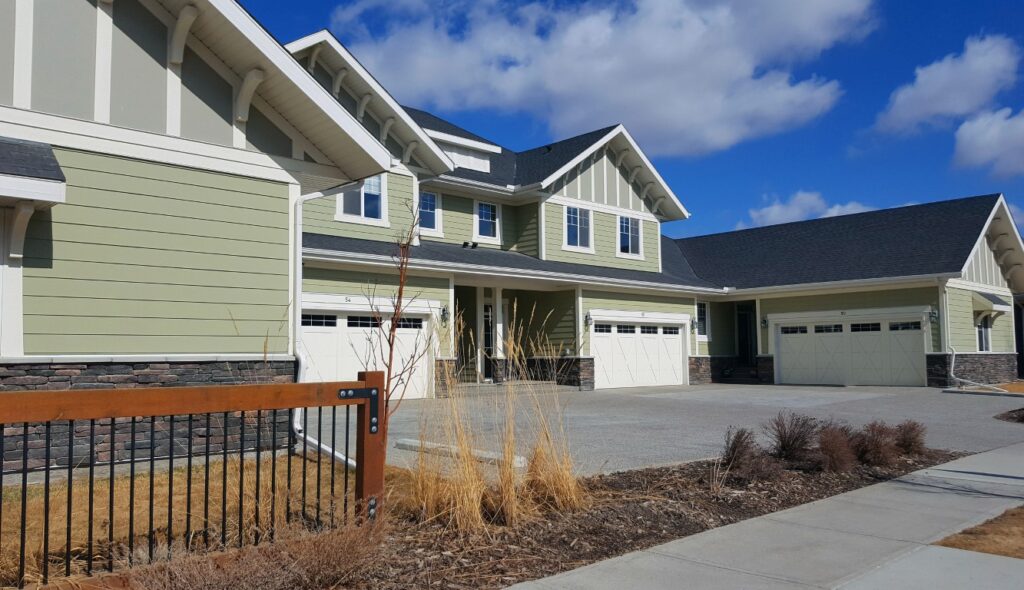
BC’s Bill 44, which came into force in 2024, is the legislative backbone of this shift. By permitting up to four units on virtually any single-family residential lot in the province, it unlocked a new way to build in challenging economic times that would have been unthinkable under previous zoning frameworks. But beyond the math that makes sense to developers – what makes Bill 44 genuinely powerful is the flexibility to deliver a wide range of housing suitable for many different family types.
I’ve worked on projects under Bill 44 with units ranging from 600 square feet to 2,600 square feet. That range is not a loophole. That is the point. The missing middle, done right, is not a single product type. It is a spectrum of living arrangements for different family types.
This variety is what the market actually needs. A 600 square foot ground-floor suite serves a single occupant or a couple who want to own in a neighbourhood they could never afford as a detached home. A 2,600 square foot unit with three bedrooms, a garage, and a private yard serves a family that would otherwise be pushed to the urban fringe. We need both, and everything in between. And neither would exist without legislation that allows this kind of flexibility.
The trend toward missing middle is not a temporary response to market conditions. It is the beginning of a longer evolution in how Canadians live. As land constraints, cost pressures, and municipal policy continue to reshape the economics of homebuilding, the typologies that sit between a detached house and a highrise tower will continue to grow in importance. The industry – builders, architects, designers, product manufacturers – needs to treat this moment as the beginning of a new era, not a gap to fill until conditions change.
Dialing In the design: No compromises
Missing middle housing is here to stay – barring a sudden reversal of political will – and that means the industry now has a responsibility to get the design right. Because design is ultimately what will determine whether people genuinely want to live in these buildings or simply tolerate them until they can afford something better.
For years, the default approach to multiplexes was to cram as many small units as possible onto a lot. That logic made sense when rezoning timelines were the barrier: if you were going to carry a project through a lengthy approval process, you pushed for maximum density to justify the risk and cost. The result was a generation of small, often poorly laid out units that gave missing middle housing a bad reputation in many communities.
That pressure is now gone. With Bill 44 removing the rezoning requirement, developers and architects are no longer forced to maximize unit count at the expense of unit quality. And on most lots, the permitted floor area allows for something much more ambitious than the bare minimum. Developers now unlocked more square footage than they know what to do with. This is an opportunity – and the industry needs to take it seriously.
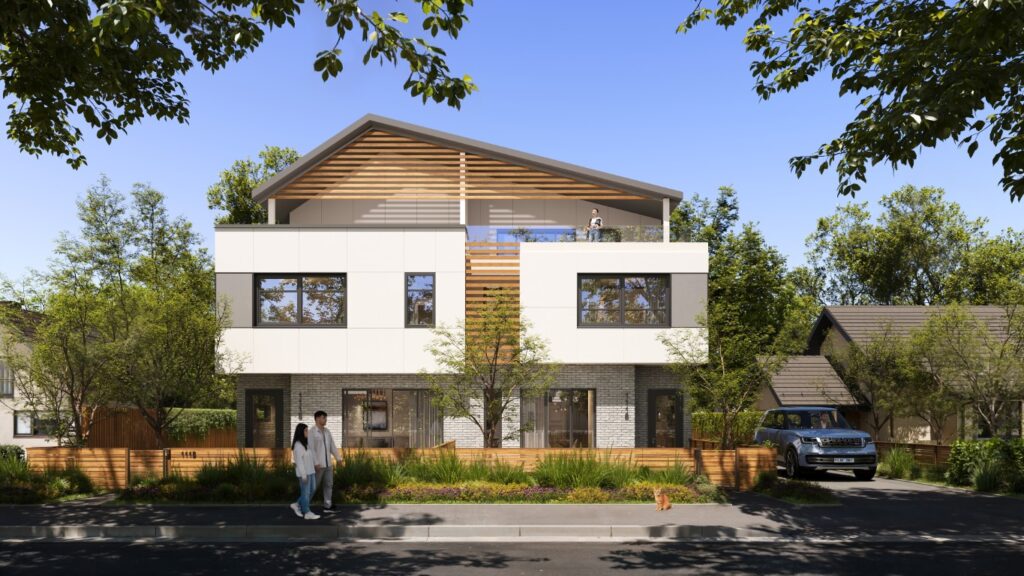
One such opportunity is our own project at 1118 Munro Street in Esquimalt, where we are proposing four units at approximately 2,500 square feet each. Units have double car garages, flex rooms, roof decks, and private yards. There are no compromises here. They tick every box that a family shopping for a single-family home on the urban fringe would have on their list and then some – and they sit within a ten-minute bike ride of downtown Victoria.
This is the standard missing middle design needs to aspire to. Not on every project – lot size, budget, and context will always vary – but as a design ambition. Flexible floor plans that work at multiple life stages. Private outdoor space that is usable. Driveways and shared courtyards that double as places for kids to play. These are the moves that transform a density project into a neighbourhood asset and give families a genuine reason to choose missing middle living, not just accept it.
There is also a generational shift underway that makes this moment particularly well-timed. Younger buyers entering the market today are not pining for a large yard and an older home with decades of deferred maintenance. Many actively prefer new construction – energy efficient, low maintenance, well-located. A well-designed missing middle unit is not a consolation prize for this buyer. It is exactly what they are looking for. Designers and builders who understand this are building for a willing and growing market.
The missing middle moment is here. The economics are driving it. The legislation is enabling it. What is not yet fully in place is the design culture and the construction knowledge base to execute it consistently well. The missing middle is not a transitional housing type. It is the new baseline of Canadian residential construction. The sooner the industry treats it that way – with dedicated design expertise, refined construction practices, and products built for the scale – the better the outcome for builders, buyers, and the neighbourhoods these buildings will shape for generations.

About Xeniya Vins
Xeniya Vins is a registered architect (AIBC, LEED BD+C) and real estate developer based in Victoria, BC. She holds a Master of Architecture from the University of Toronto and has worked at leading firms including BIG – Bjarke Ingels Group, S2 Architecture, and WA Architects before establishing XV Architecture Ltd. on Vancouver Island. She is co-founder of Xquimalt Developments, a design-build firm she operates with her husband Janos, a builder, focused on high-end homes and multi-unit infill projects across Greater Victoria. Xeniya sits on the Saanich Advisory Design Panel and brings a rare dual perspective to missing middle housing: she is simultaneously the architect, the developer, and – in the case of their fourplex at 1118 Munro – the future resident. She is active on Instagram sharing the real costs and decisions behind fourplex development in British Columbia.
About XV Architecture Ltd.
XV Architecture Ltd. is a woman-led, Victoria-based architectural practice focused on residential and small-scale multi-unit design. The firm specializes in infill housing and development permit work in the Greater Victoria area, with a particular focus on the missing middle typologies — fourplexes, duplexes, and small-scale multi-family — that are reshaping how Canadian cities grow. XV Architecture is committed to design that delivers family oriented, efficient housing that is built to last.
Leave a Reply