

By Lynn White, CEO of ACCESS – Aboriginal Community Career Employment Services Society
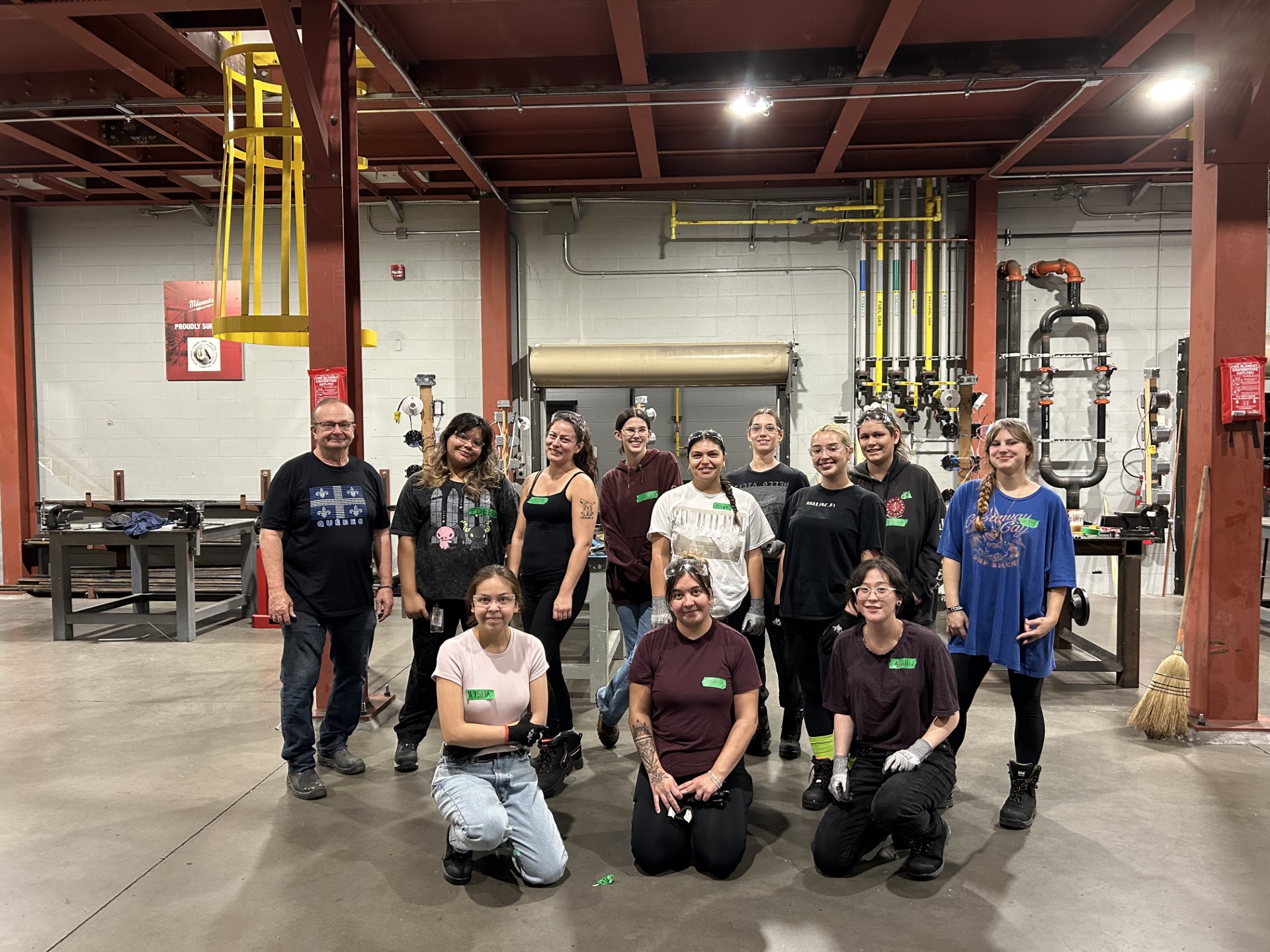
Across Metro Vancouver, Indigenous women are stepping into the skilled trades with confidence, purpose, and pride.
They are electricians, welders, carpenters, metal fabricators, security systems technicians, bridge watch talent, and more – women who are reshaping industries that have historically excluded them.
At the centre of this important shift is nonprofit organization ACCESS – Aboriginal Community Career Employment Services Society. Our organization is dedicated to ensuring that Urban Indigenous women have full access to the training, supports, and opportunities needed to thrive in various trades roles and sectors.
For more than two decades, ACCESS has worked to remove systemic barriers and uplift Indigenous people in their employment journeys. Supporting women in trades has become one of the organization’s strongest areas of impact, especially as demand for skilled workers continues to grow across British Columbia with major projects in construction and a growing lack of talent in the (but not limited to) marine and industrial sectors. Employers are seeking diverse talent, and Indigenous women are becoming a vital part of that workforce.
Historically, the skilled trades have been viewed as a male dominated field – but that reality is changing. More women are entering trades than ever before, bringing talent, innovation, and leadership to industries that desperately need skilled workers.
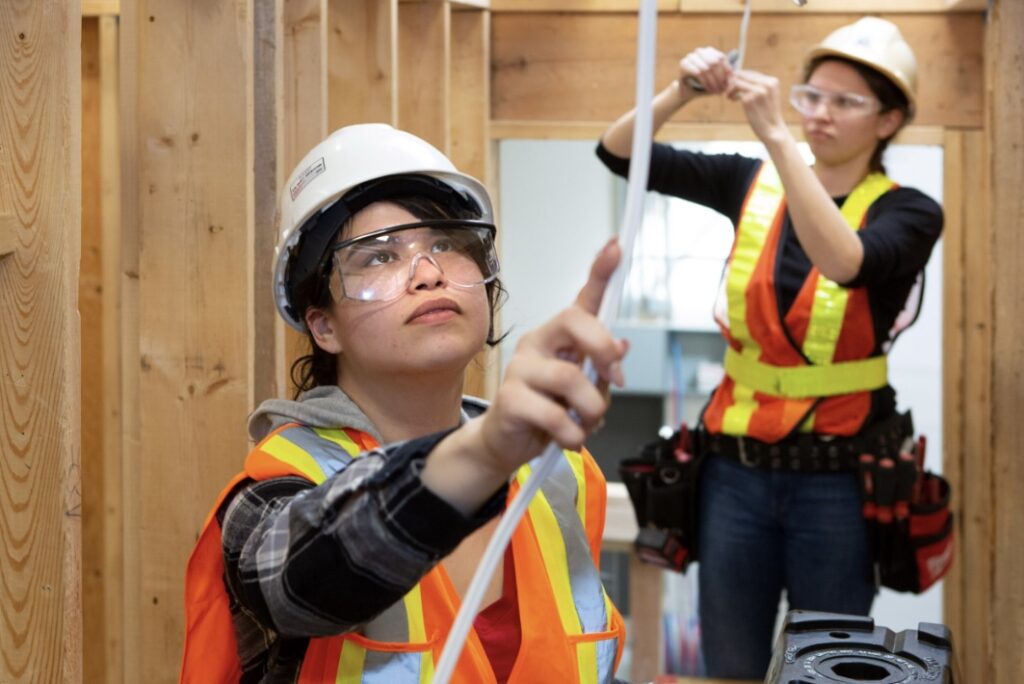
With women now comprising 15 per cent of our trades cohorts, ACCESS achieves participation levels at triple the national average.
Women entering our programs receive access to tuition, books, work gear, tools, living allowance, and transportation to ensure financial barriers do not block their goals. Employment counsellors provide one-on-one guidance, ensuring each participant has a clear plan – followed by a coach and apprenticeship advisor from training to apprenticeship to long-term career stability.
Culturally grounded support is woven through our programs. Often women share that culture is what makes them feel safe, welcomed, and capable of succeeding in an industry where they are often the only woman – or the only Indigenous person – on site.
Employers benefit from a skilled and committed workforce, and women gain meaningful access to apprenticeships and long-term employment. Many graduates have advanced into leadership roles, obtained Red Seal certifications, or moved into specialized sectors with strong earning potential. We have found that in most trades women rise to be the top students.
ACCESS has developed longstanding partnerships with employers and unions that recognize the importance of building a diverse labour force. Partners such as Seaspan, Skilled Trades BC, and BC Building Trades are industry partners, and training providers that work closely with ACCESS, opening more doors for Indigenous women.
The impact of supporting Indigenous women in trades reaches far beyond individual success. Women who complete their program become role models for their families and communities. Their achievements help shift stereotypes about who belongs in the trades and inspire younger generations to pursue technical careers.
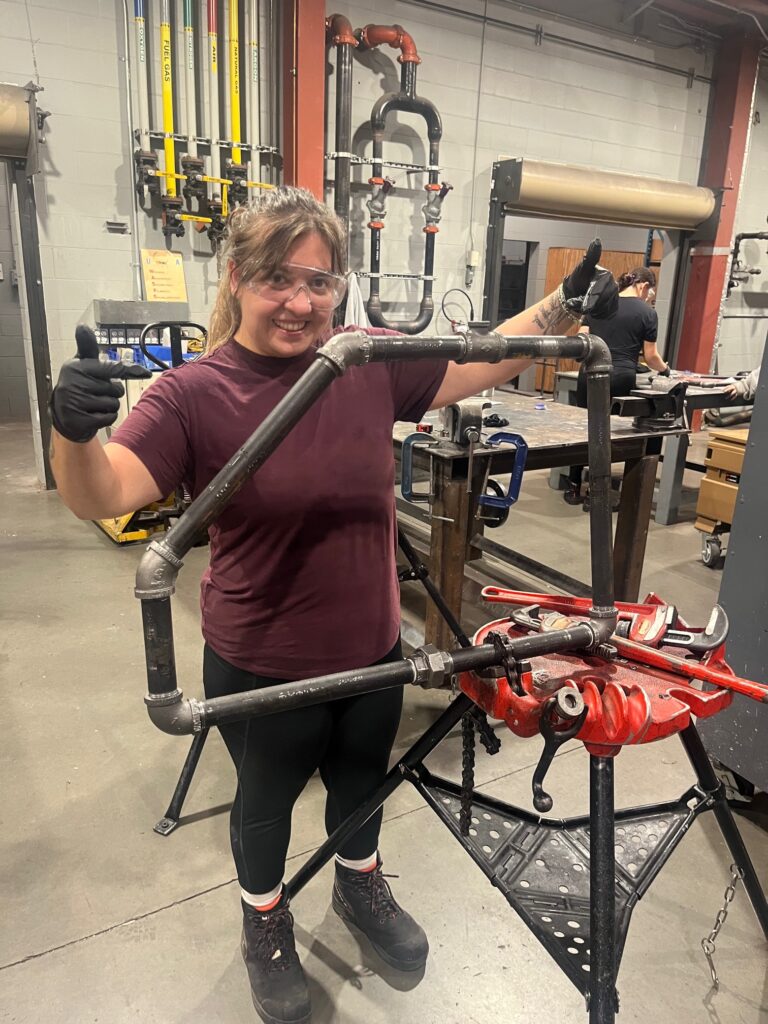
The economic impact is equally powerful. Trades careers offer stable wages, benefits, and long-term growth potential – foundations that support family security and community well-being. Our participants share that entering the trades has changed their lives and transitioned them out of poverty, while providing them with pride, purpose, and independence.
ACCESS’s work contributes to the Truth and Reconciliation Commission’s (TRC) Calls to Action and the United Nations Declaration on the Rights of Indigenous Peoples (UNDRIP) by increasing Indigenous representation in sectors where opportunities have been historically limited. Through culturally safe programming and industry partnerships, we support reconciliation not just in words, but with action, and are building pathways that empower Indigenous people and strengthen Canada’s workforce.
The future of the skilled trades depends on equity, inclusion, and Indigenous leadership. ACCESS remains committed to expanding training opportunities, strengthening partnerships, and advocating for the inclusion of Indigenous women in every trade.
With every participant, every graduate, every apprenticeship, and every success story, Indigenous women are transforming industries and creating brighter futures. This ripples from individual to family to community and reaches further into the larger society to improve conditions for all Canadians.
ACCESS is proud and honoured to walk beside them – lifting, supporting, and celebrating their journeys every step of the way.

About Lynn White
Lynn White (Laanii Ym Yath Gaax) is a member of Gitxaala Nation – Raven Clan. Lynn serves as CEO for Aboriginal Community Career Community Employment Society (ACCESS), as she has done for twenty years. Lynn also serves as Executive Director for Urban Spirit Foundation, a charitable organization founded by ACCESS, working to grow philanthropic resources to further the success of Urban Indigenous People through scholarships and supports that help break the cycle of poverty and move Indigenous people toward self-sufficiency.

About ACCESS
ACCESS, a proud Indigenous-led nonprofit, is dedicated to empowering Urban Indigenous Peoples in Metro Vancouver through education, skills training, employment opportunities, and professional development. ACCESS is one of the most comprehensive Indigenous training providers in Canada and provides a variety of employment and training programs and services. Through a modern blend of interdisciplinary programs across industry sectors, ACCESS is dedicated to supporting urban Indigenous people in overcoming employment barriers and finding rewarding career opportunities.
Leave a Reply