

By Harald Sinow, CEO, Creo Developments
When I founded Creo Developments, my goal was not simply to build homes. It was to refine how we build them – reducing inefficiency, improving quality, eliminating waste, and elevating the experience for everyone involved: the trades, the community, and homeowners. Over time, that pursuit led us to embrace prefabricated construction and a model where our trade partners are financially invested in the success of each project.
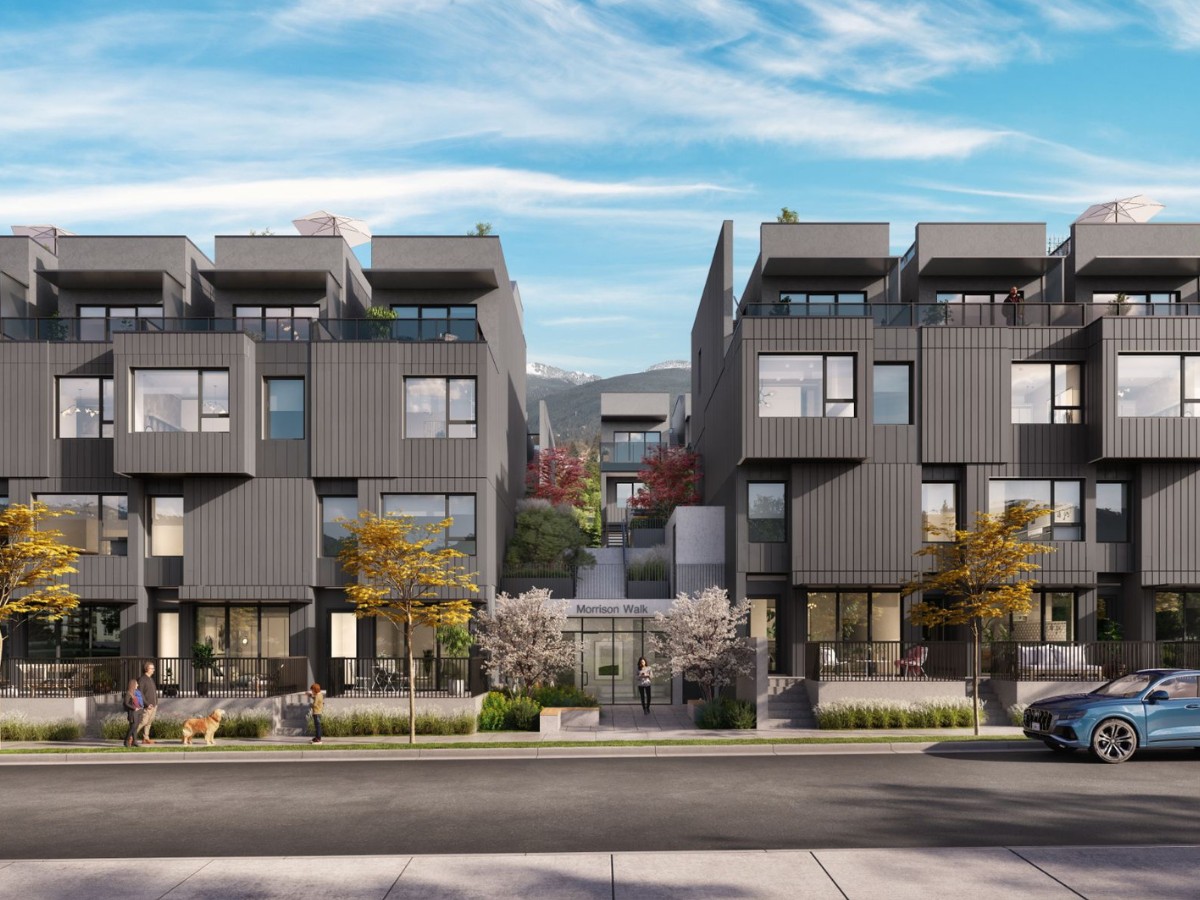
Our latest community, North Vancouver’s Morrison Walk , brings these principles together in a way that reflects the future of our industry.
Seeing the true value of prefabrication
We first saw the benefits of prefabrication five years ago while pursuing LEED Gold certification on a previous project. Tracking waste was a core requirement, and we quickly realized that prefabrication was the only reliable way to achieve precise measurement and material efficiency. We saw that by using digital tools, we could measure timber and other materials precisely, decreasing waste significantly.
Once we started analyzing data, the benefits extended far beyond waste reduction. Prefabrication helped us improve scheduling accuracy, reduce on-site noise, and minimize disruption in established neighbourhoods – a critical factor in urban infill projects like Morrison Walk, which sits steps from Moodyville Park and a few minutes from the Shipyards District. Much of the construction occurs off-site, under controlled conditions, which means weather delays are nearly eliminated and neighbouring residents are spared months of heavy noise and traffic.
There’s also a human dimension. Prefabrication shifts a sizable portion of the work into sheltered environments, improving conditions for trades talent. Better lighting, safety, and consistency lead to higher-quality output and greater efficiency. It’s one of those rare adjustments that benefits both the bottom line and the workforce.
From collaboration to co-ownership
While technology and process improvements matter, one of the biggest challenges in construction isn’t technical – it’s behavioural. Misaligned incentives between developers, general contractors, and trades can quietly undermine even the best-run projects.
We’ve all seen it happen; trades talent is spread thin across multiple sites, projects are delayed as priorities shift, and there is a cascade of change when unforeseen challenges arise. At Morrison Walk, we wanted to eliminate those divides so, we did something different – we invited our key trades to invest alongside us.
Our prefabrication framing contractor, NuFrame Group, along with our painters, general contractor, and several others, hold an equity stake in the project. That changes everything. Instead of negotiating change orders, everyone is focused on completing the project efficiently, safely, and to the highest standard. When timelines and budgets are met, everyone benefits.
NuFrame’s involvement has been particularly transformative. Their team’s experience in structural prefabrication and panelized framing systems allowed us to reduce waste, streamline site logistics, and maintain exceptional precision. It also introduced a culture of accountability and mutual respect. When the trades are investors, every decision – large or small – carries shared weight.
A practical approach to innovation
I’ve learned that innovation in our industry rarely happens in sweeping gestures. It’s the incremental, tested changes – implemented consistently – that move the needle. Prefabrication and trade investment are two sides of the same philosophy: build smarter by aligning values and removing friction.
At Morrison Walk, we use Building Information Modeling (BIM) and third-party scheduling verification to support that philosophy. Every clash or delay avoided upstream translates to savings and stronger trust downstream. Prefabrication fits naturally into this model, providing the predictability that both financiers and trades can rely on.
With Cassette Construction as our builder, we’ve been able to maintain a clean, quiet site in the heart of Moodyville while keeping the project firmly on schedule for a Fall 2026 completion. In today’s market, delivery risk is one of the biggest variables, and homebuyer confidence matters as much as design quality or location.

Building with – and for – the community
North Vancouver has always been a place where community and craftsmanship intersect. Our developments are intentionally mid-scale – projects where we know the people building them and those who will live in them. Prefabrication supports that approach because it allows precision and sustainability without industrializing the feel of the work.
At Morrison Walk, that’s reflected in everything from our House of Bohn–designed interiors to the way we’ve structured logistics to minimize neighbourhood impact. The quieter, cleaner construction process is as important to us as the efficiency gains. Development shouldn’t come at the cost of community comfort.
The project also reflects our commitment to sustainability in tangible ways. Every home includes a Level 2 EV-ready parking stall, and the community is registered under RBC’s Green Mortgage Program, rewarding buyers for choosing energy-efficient homes. Sustainability isn’t simply about the product – it’s about the process. Reducing waste, shortening schedules, and improving worker safety are all forms of sustainability.
Aligning interests for the long term
When trades have skin in the game, there’s a level of care that simply cannot be replicated through contracts alone. Deadlines become personal. Quality control becomes second nature. The pride in ownership extends from the framing stage to the final walkthrough.
The model isn’t without complexity – structuring investment partnerships requires trust, communication, and legal precision – but the results speak for themselves. We’ve seen improved scheduling, reduced disputes, and a stronger sense of shared purpose across every level of the build.
For other developers considering this approach, I recommend starting small. Identify the partners who already act like stakeholders – those who see the big picture – and invite them to become true ones. The shift in dynamic is immediate and enduring.
Looking ahead
Prefabrication and trade investment aren’t just tactics; they represent a shift toward accountability and collaboration. The construction industry has long been defined by siloed roles and competing incentives. If we can replace silos with shared ownership and smarter processes, we can raise the standard of how housing is built in Canada – especially in the dense urban markets that need it most.
At Morrison Walk, that philosophy has taken shape in timber, steel, and shared commitment. The result is more than a collection of townhomes; it’s a model of what happens when everyone builds with a common goal.

About Harald Sinow
Harald Sinow is the Founder and CEO of Creo Developments, where he leads the planning and delivery of thoughtful multifamily housing across the Lower Mainland. His background spans residential investment, multifamily development, and retail buildouts, giving him a broad operational view of how projects move from concept to completion. Harald is known for disciplined execution, attention to detail, and building teams that deliver high-quality homes with consistency.

About Creo Developments
Creo Developments Ltd. designs and builds architecturally distinct townhomes with a focus on lasting quality, performance, and livability. Their homes are crafted for real family lifecycles, with every detail shaped by a clean, modern Creo aesthetic and backed by the Creo Warranty for long-term peace of mind.
Creo as a quality-driven, community-minded builder of thoughtfully designed townhomes. Emphasize pride of ownership, high-performance construction, and design that feels intentional and refined—homes people are genuinely happy to live in for years.
Leave a Reply