

By Rich Cowan, Staff Writer
Editor’s note: This blog was written with information provided in a free webinar by Procore. You can watch it and other construction-related content at https://www.procore.com/en-ca/webinars. Thank you Procore for covering this important topic.
When we consider the construction industry, we often think of the physical toll and demands that the job requires of workers. The skill, precision, and physical abilities needed to do their part in building the infrastructure we all depend on are often considered the most important contributions of workers. Safety and ensuring the physical well-being of all who are involved in the construction trades is paramount, of course. But what about the toll the industry can take on other areas of the lives of those employed in construction?
A recent webinar hosted by construction software company Procore delved into an area that traditionally is not talked about. Moderated by Sasha Reed, Senior Director of Industry Transformation at Procore, and joined by Mark Nolan, Senior Leader of Environment Social Governance (ESG) strategy and operational excellence at Multiplex, Chris Gardner, CEO and President of the Independent Contractors and Businesses Association (ICBA), and Fred Mills, Founder of The B1M construction video channel, the discussion centred around a concern that has remained hidden for far too long – mental health.
Unmasking mental health
As was noted by Sasha Reed in her introduction, the theme of this year’s Mental Health Week is Unmasking Mental Health. This theme couldn’t be more fitting – or timely. She described that, “The Canadian Mental Health Association (CMHA) is encouraging Canadians to have honest conversations that build connection and understanding.”
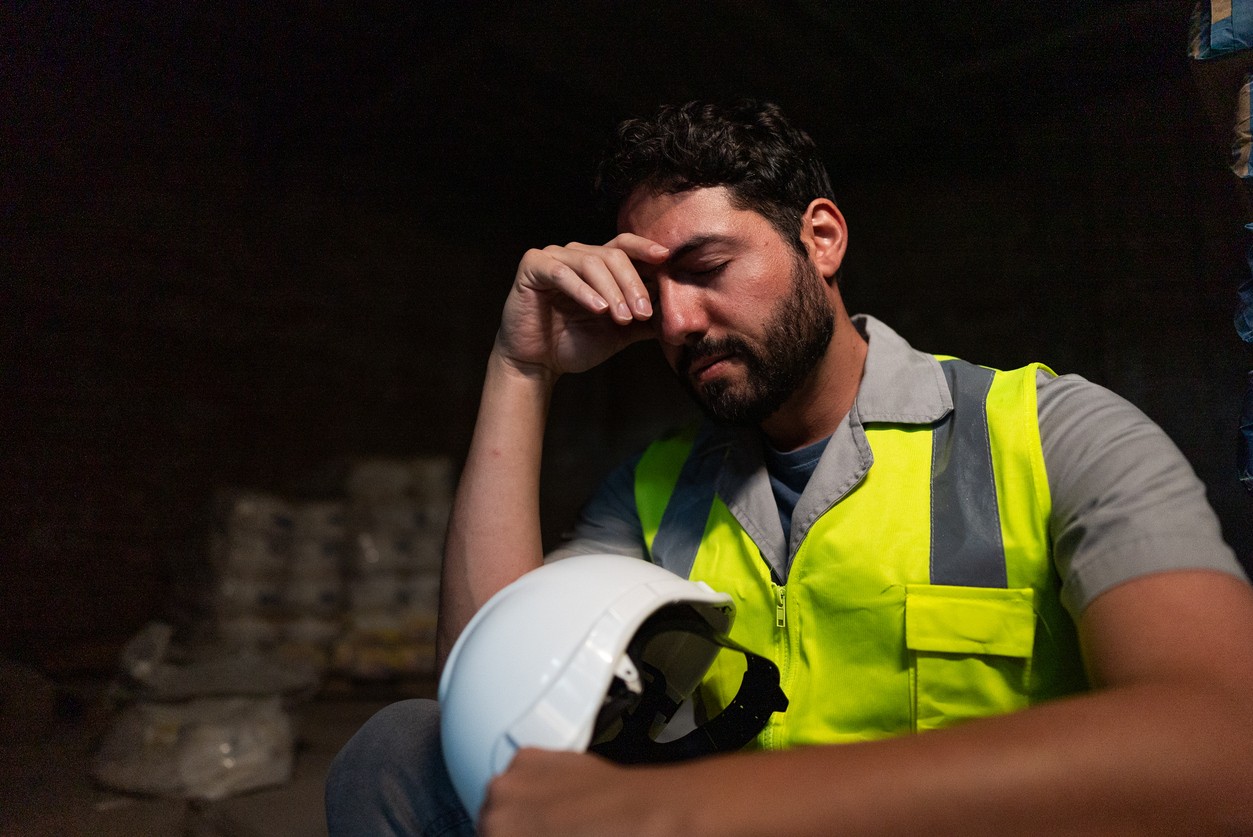
There are several reasons for this encouragement. For construction, those conversations are urgently needed. She went on, “According to Statistics Canada, 33 per cent of construction workers report poor mental health, and 64 per cent wish their employers did more to support them.” This is striking, but an even more sobering reality is that, globally, construction has one of the highest suicide rates of any sector.
Reed mentioned that in 2023, Procore and B1M partnered to launch a global initiative called, Get Construction Talking, which has the goal of “raising awareness, breaking stigma, and raising $1 million to fund nonprofits that are providing mental health resources to construction workers worldwide.” She noted that “To date, we’ve reached over 20 million people and raised $950,000. These successes stand as evidence that when we unite, we can make a difference.”
Learning the importance of mental health initiatives the hard way
For Mark Nolan, the issue is deeply personal. In 2021, Multiplex lost one of their workers to suicide. That tragedy became a turning point for him, and for the company. “It forced us to put every available support into action,” Nolan said. “We were reminded how critical those resources truly are.”
Determined to drive systemic change, Nolan wrote an open letter to the Canadian government and industry leaders, urging collaboration to obtain national, industry-specific data, not previously made available. Transparency and accountability were the goals.
“We formally engaged with Statistics Canada,” Nolan explained. “Once we’re armed with the facts, it opens the conversation – and conversations can save lives. At Multiplex, psychosocial well-being has become an issue of utmost importance. From Health and Safety Month initiatives to mental health awareness days along with leadership training, they’re working to create a culture where it’s truly okay not to be okay.”

The value of collaboration: The holistic approach of the ICBA
Chris Gardner pointed out that he sees the mental health crisis through the lens of the available data. The ICBA administers health and dental plans to over 300,000 people across Canada. When the association analyzed its post-COVID prescription data, the findings were quite surprising.
“The number one category of prescriptions written by doctors on every single plan included ADHD, depression, and anxiety,” Gardner said. “That information spurred ICBA to act, the result being a comprehensive year-long mental health and wellness program for its 5,000 member companies. Each month focuses on a specific theme – from stigma to addiction, financial fitness, and physical health – because mental well-being is about the whole person. We make sure that when someone says, ‘I’m struggling,’ they can get help immediately,” Gardner said. “It’s not good enough to be told ‘you’ll get an appointment in six months.’”
So far, approximately 20,000 people have completed the program. Thanks to partnerships across the country, it’s offered free of charge to all their members. Gardner did emphasize however, that this can’t merely be a management initiative. It must be a cultural shift in all areas of the construction industry. “Construction is traditionally a male-dominated industry,” he said. “Traditionally, the culture is focused on getting the job done. But we’re changing that. We’re creating environments where people can speak up without fear.”
The B1M and the impact of “Get Construction Talking”
For Fred Mills, his motivation was deeply personal. “I used to think mental health affected other people,” Mills shared. “Then I found myself struggling with depression – and it hit me that this can affect anyone.”
That experience inspired Mills to use his platform, The B1M, to bring the message to the forefront. “I’ve loved construction my whole life,” he said. “To see it grappling with such a devastating issue was heartbreaking. So, I decided to use our reach to do something about it.”
Partnering with Procore was “a no-brainer.” Together, they developed Get Construction Talking, a global campaign that features videos, podcasts, live events, and a comprehensive online toolkit on the website, www.getconstructiontalking.org. The toolkit helps both individuals and businesses take meaningful action. It includes downloadable guides that outline a variety of steps for starting conversations, identifying signs of distress, and accessing mental health resources.
Mills believes that awareness must go hand in hand with cultural change. “We need parity between physical safety and mental health,” he said. “You wouldn’t step onto a site without a hard hat or high-vis vest. We should treat mental health with the same seriousness.”

The business case for caring
Beyond compassion, there’s a clear business imperative. Construction is entering a new era of rapid expansion along with immense pressure. According to global management consulting firm McKinsey, global construction spending is projected to jump from $13 trillion in 2023 to $22 trillion by 2040, requiring the industry to double its growth rate. Yet in Canada alone, 20% of the current construction workforce – roughly 245,000 workers – will retire by 2032. This quickly approaching “brain drain” is creating additional stress for remaining workers, increasing burnout and fatigue.
The Future State of Construction Report revealed that 45% of workers cite burnout as a top reason for leaving their jobs, and 35 per cent point to wages and financial stress as major contributors to mental health challenges. As Mills put it, “This isn’t a side issue. It’s the issue. If we don’t take care of our people, the industry won’t survive – let alone thrive.”
Technology offers part of the solution. Tools that capture institutional knowledge, improve safety, and streamline communication can reduce workload pressures and create better work-life balance. Technology is not enough on its own, however. As Nolan related, “Psychological safety must be embedded in how we operate. People need to feel supported, heard, and set up for success.”
Building a compassionate future
The construction industry has always been about building – not just structures, but communities. Now, it must also build a culture of compassion. As the webinar drew to a close, each speaker offered a final takeaway:
- Mark Nolan: “In Canada, 1,000 people die each year from workplace incidents – but 3,600 working-age Canadians die by suicide. That’s nearly four times as many. Let’s support better data, stronger advocacy, and a more compassionate culture.”
- Chris Gardner: “Too many people are suffering in silence. The silence runs deep – and when it surfaces, the consequences can be catastrophic. Let’s take care of the people who build our world.”
- Fred Mills: “Everyone struggles with mental health. It doesn’t make you weak – it makes you human. Let’s normalize that conversation.”
The path forward
Construction is an industry of great importance to our society – but it’s inherently built and maintained by humans with all their flaws and struggles. The future of the industry depends not only on innovation and technology, but on empathy, understanding, and collective action. The webinar participants gave excellent insights and examples throughout of the importance and effectiveness of breaking the silence of struggle, unmasking mental health, and getting construction talking. They encouraged viewers that we truly can build more than projects – we can build a stronger, healthier, and more resilient workforce for generations to come.
If you or someone you know needs immediate mental health support, especially for suicide prevention, call or text 988 (in North America) anytime for free, confidential help.
Leave a Reply