

By Maxime Duzyk, Director of Building Science and Engineering at Huntsman Building Solutions
November is Radon Action Month – a good reminder that one of the most important air quality decisions on any project should be made before the first wall goes up. According to Health Canada, radon exposure is estimated to cause more than 3,000 lung-cancer deaths in Canada each year, making it the number-one cause of lung cancer for non-smokers.
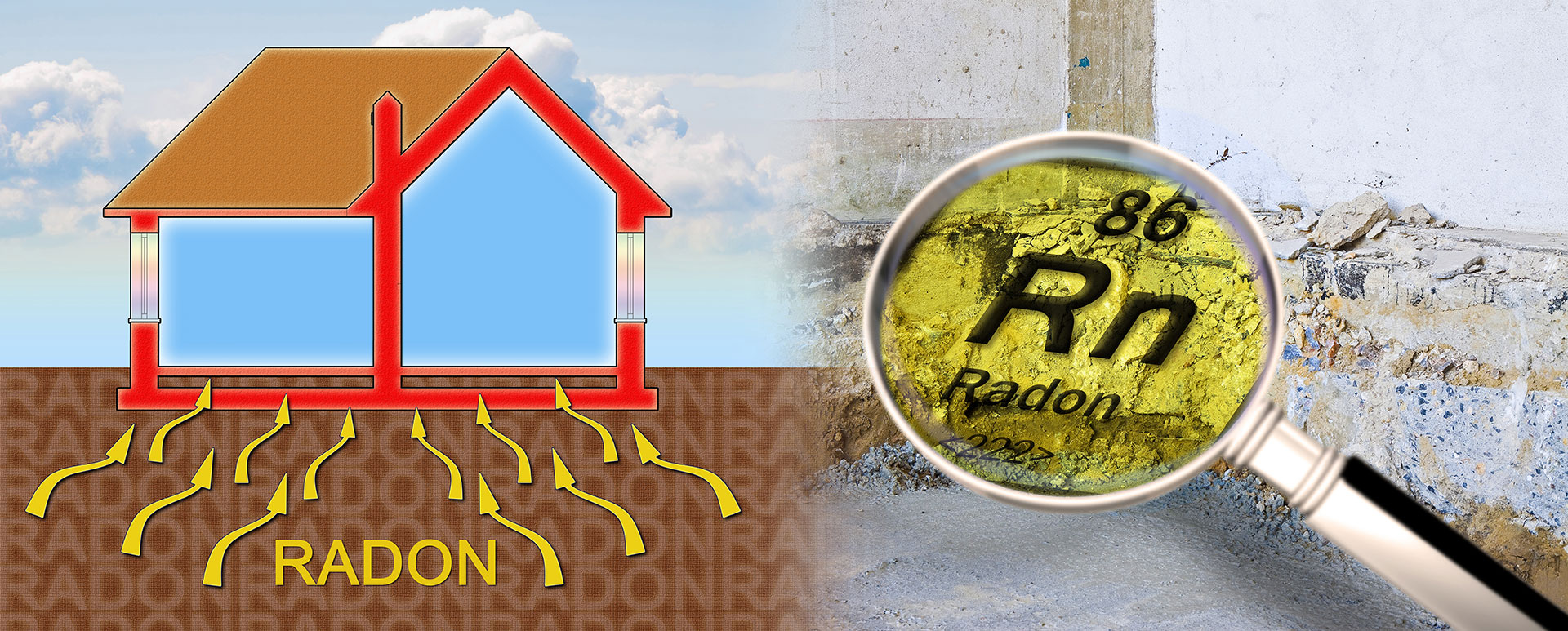
Radon is a naturally occurring soil gas that moves upward through cracks, joints, and openings in the foundation. It has no smell, no colour, and no warning signs for occupants, yet when it builds up indoors it can quietly compromise air quality and long-term health. In 2023, only about 58 per cent of Canadian households had heard of radon. Of those, just 12 per cent reported ever testing their home – suggesting a major awareness and action gap.
In Western Canada, the risk is greater. Uranium-rich soils, permeable glacial deposits, and cold winters create strong stack effect, drawing soil gases into heated buildings. Traditional defenses like membranes and vent pipes can help, but only if the below-grade air barrier is fully continuous. A small gap or tear left unsealed can turn into a year-round pathway for radon infiltration.
That’s why more builders now see the foundation and slab as more than just a structural element –it’s a key part of the air-quality strategy. Continuous sealing solutions, such as closed-cell spray foam, offer a modern approach to building tighter, more dependable below-grade assemblies right from the start.

Why it matters: The cost of inaction
For builders, radon isn’t just a background environmental issue – it’s a professional risk with real-world consequences. When below-grade air sealing is treated as optional, the effects reach beyond air quality and into every part of a business: compliance, contracts, liability, cost, reputation, and health.
- Regulatory risk
Across Canada, radon requirements are tightening. The National Building Code and several provincial codes now require provisions for radon rough-ins or mitigation in new construction, and updates continue to emphasize air-barrier continuity below grade. Failing to design or verify these measures can leave a project out of compliance – and expose builders to stop-work orders or costly remediation once inspectors flag deficiencies or higher radon levels after construction.
- Contractual exposure
Construction contracts increasingly reference indoor air quality, energy performance, or specific code clauses tied to radon protection. If radon levels later exceed allowable thresholds, owners may invoke warranty, deficiency, or performance clauses that push remediation costs back to the contractor. For design-build or turnkey projects, that liability can extend years beyond handover.
- Tort and legal liability
If radon exposure leads to occupant health impacts, claims can move beyond contract to tort law – alleging negligence in construction, inspection, or material selection. Even when claims don’t succeed, the cost of investigation, expert reports, and legal defense can be significant. Establishing a clear record of proactive radon mitigation provides a strong due-diligence defense.
- Financial and reputational impact
Remediating a high-radon building after occupancy can mean cutting into finished slabs, installing active fan systems, or temporarily vacating spaces – often at the builder’s expense. Beyond direct costs, word travels quickly in regional markets; repeated issues can affect prequalification for future bids and erode client confidence. Demonstrating airtight construction and radon awareness, by contrast, positions builders as forward-thinking and quality-driven.
- Health and safety responsibility
Ultimately, radon control is part of a builder’s duty of care. It directly affects the long-term safety of the people who live and work in the spaces built today. Taking radon seriously reinforces a culture of health and quality on site – the same mindset that drives safer work practices, better building envelopes, and stronger client relationships.
Where conventional barriers fall short
Traditionally, radon mitigation under slabs relies on membranes, sealants, and vent pipes. These work in principle but are highly dependent on workmanship. A sheet membrane, for instance, must be laid perfectly flat, overlapped, taped, and sealed at every column, footing, and penetration. One missed joint or torn section during rebar installation or concrete placement can compromise the entire layer.
Builders also face real-world pressures: tight schedules, cold weather, trades working in sequence rather than together. On a busy site, it’s easy for a plastic sheet to shift, get punctured, or lose adhesion at the edges. Once the slab is poured, repairs become nearly impossible.
Passive venting systems add another variable. They rely on natural pressure differences to move gas through a pipe to the outdoors, but in still conditions or with unexpected airflows, movement can stall. Many systems end up retrofitted later with fans or active depressurization simply because the original barriers weren’t continuous.
What building-science research shows is that soil gas behaves like air under pressure – it follows the path of least resistance. If even small gaps remain in the below-grade air barrier, radon will find its way through. That’s why the next step in radon-resilient construction is focusing on continuous, durable air sealing – not just individual components.

Sealing below grade with closed cell spray foam
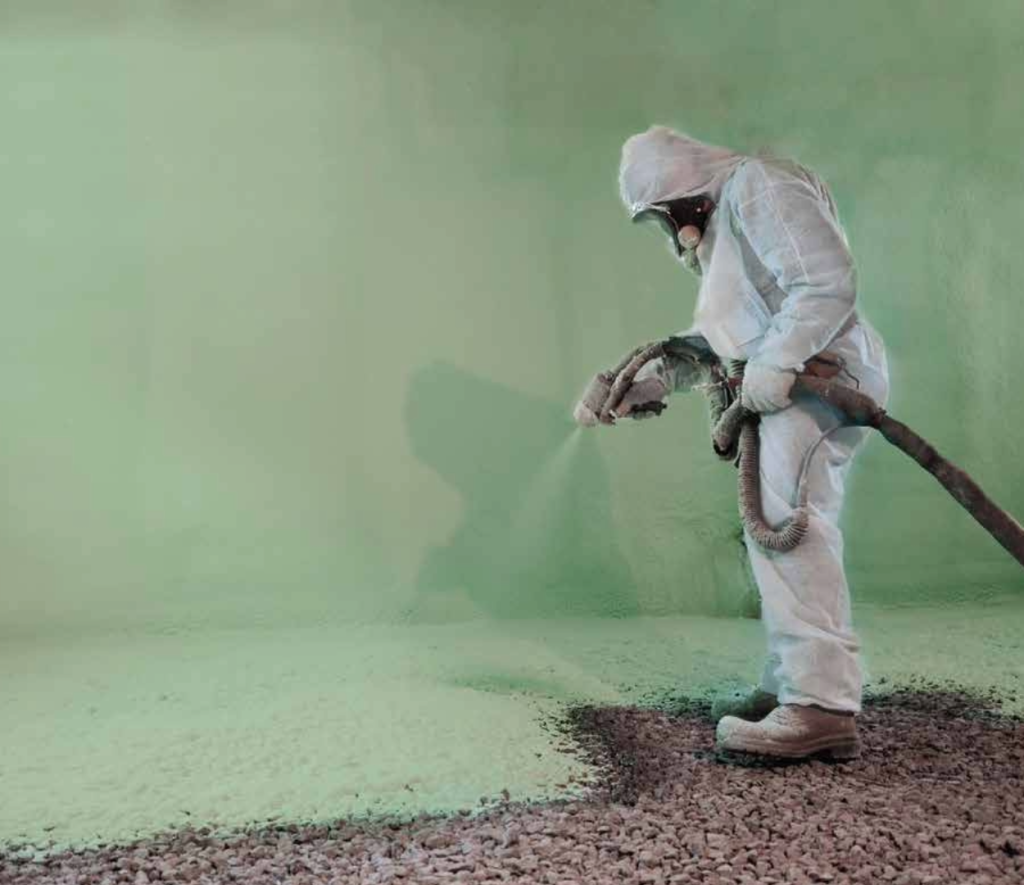
Closed-cell spray polyurethane foam (SPF) offers one practical path to better continuity. Applied directly to concrete, block, crushed stones on the ground, existing slab, or other rigid substrates, it expands into voids and irregularities, forming a seamless, bonded layer that blocks air and moisture at the same time.
Because it adheres tightly, spray foam can bridge small cracks and seal around penetrations that are notoriously difficult to detail with sheet membranes – areas such as footing-wall joints, utility entries, and anchor bolts. Once cured, the surface is monolithic and durable, with enough compressive strength to stand up to backfill or slab loads when properly protected.
In Western Canada, this combination of airtightness and moisture resistance is especially valuable. Frost, freeze-thaw cycles, and soil movement can open gaps in traditional sealants or rigid sheets. Spray foam’s adhesion and flexibility help maintain the seal even as materials expand and contract.
At the same time, its low permeability limits vapor migration – a benefit in damp soils or high-water tables where moisture can degrade insulation or finishes over time. The result is a layer that performs multiple functions at once:
- Air barrier: Prevents soil gases from entering
- Moisture barrier: Resists vapour drive and moisture from the ground
- Thermal break: Reduces heat loss at foundation edges and slabs
The real advantage is how it simplifies transitions. With a continuous spray application, builders can carry the same material from under the slab up the wall and across the rim joist, eliminating one of the most failure-prone junctions in the building envelope. That kind of continuity is difficult to achieve with separate sheets, tapes, and sealants.
Field experience also shows that the visual coverage of spray foam makes quality control easier. Applicators, supervisors, and inspectors can immediately see if gaps remain. That transparency supports a higher standard of workmanship – a major factor in consistent radon performance.
From mitigation to integration
For many builders, the mindset around radon control is shifting – from reactive mitigation to proactive integration. Instead of treating is as a specialty system that’s installed at the end of the job, contractors are planning radon protection alongside foundation design, insulation, and waterproofing.
That coordination matters. The best results come when the below-grade air barrier is part of the same conversation as drainage, structural loads, and thermal insulation. For example:
- Detailing transitions at footings and slabs during design reduces field improvisation later.
- Sequencing spray foam application after mechanical rough-ins avoids punctures and repairs.
- If the spray foam is applied to the exterior of the foundation, protecting finished foam with coatings or drainage boards prevents damage during backfill.
Third party material and assembly testing or certification and quality assurance is also key. On site, that means confirming substrate dryness and temperature before spraying, checking thickness with probes, and visually verifying full coverage. After construction, optional radon testing can confirm the building is performing as intended.
Building scientists increasingly point out that airtightness targets are rising in every part of the envelope. Below-grade assemblies shouldn’t be the exception. A continuous, verifiable air seal from foundation to room is what truly defines a high-performance building.
When properly integrated, spray foam can help builders achieve that continuity without adding complexity. It replaces multiple layers of sheet goods and tapes with a single, bonded application that works with the structure instead of against it. The result: less guesswork, fewer call-backs, and a healthier indoor environment for occupants.
Conclusion: Raising the bar for healthy, durable buildings
Radon may be invisible, but the solutions don’t have to be complicated. Western Canada – where cold winters, variable soils, and strong stack effects make sub-slab sealing critical – attention to the details below grade can have a measurable impact on occupant health and long-term building performance.
As construction moves toward tighter envelopes and higher standards, builders who treat below-grade air sealing with the same care as above-grade detailing are setting a new benchmark. Closed-cell spray foam, when properly designed and applied, is one practical way to get there. It turns foundation from a potential entry point into a line of defense – helping buildings breathe less from the ground and perform better for decades to come.

About Maxime Duzyk
Maxime Duzyk is the senior global director of building science and engineering at Huntsman Building Solutions. He holds a background in architecture and has been in the sprayfoam insulation business for the last 15 years. Duzyk is involved with different building envelope committees and associations in North America such as CSC, SFC, SPFA, CCMC, and ULC Standards.

About Huntsman Building Solutions
The Huntsman Building Solutions business is a global leader in high-performance, sustainable building envelope solutions. Its systems and solutions are widely utilized to optimize commercial and residential structures worldwide in both new construction and retrofit applications. Formed in 2020 with the acquisition of Icynene-Lapolla and its combination with Demilec, the Huntsman Building Solutions business capitalizes on legacy industry technologies, environmental stewardship, and the power of the Huntsman brand.
For more information, visit huntsmanbuildingsolutions.com.
Leave a Reply